FUTURE MATHEMATICS TEACHERS DEMONSTRATED A MODEL OF A SCHOOL LESSON IN A SIMULATION FORMAT
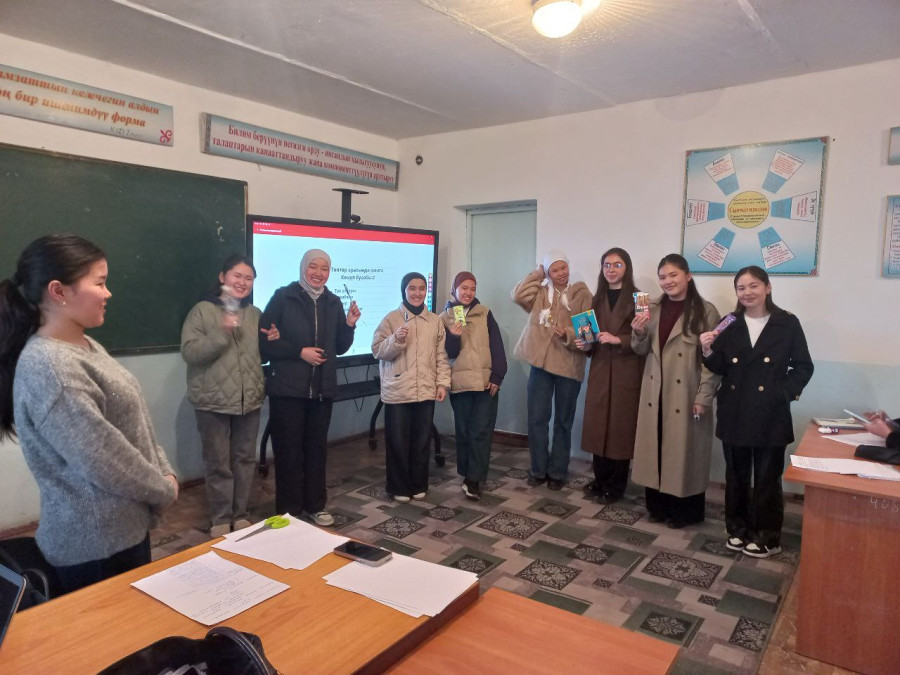
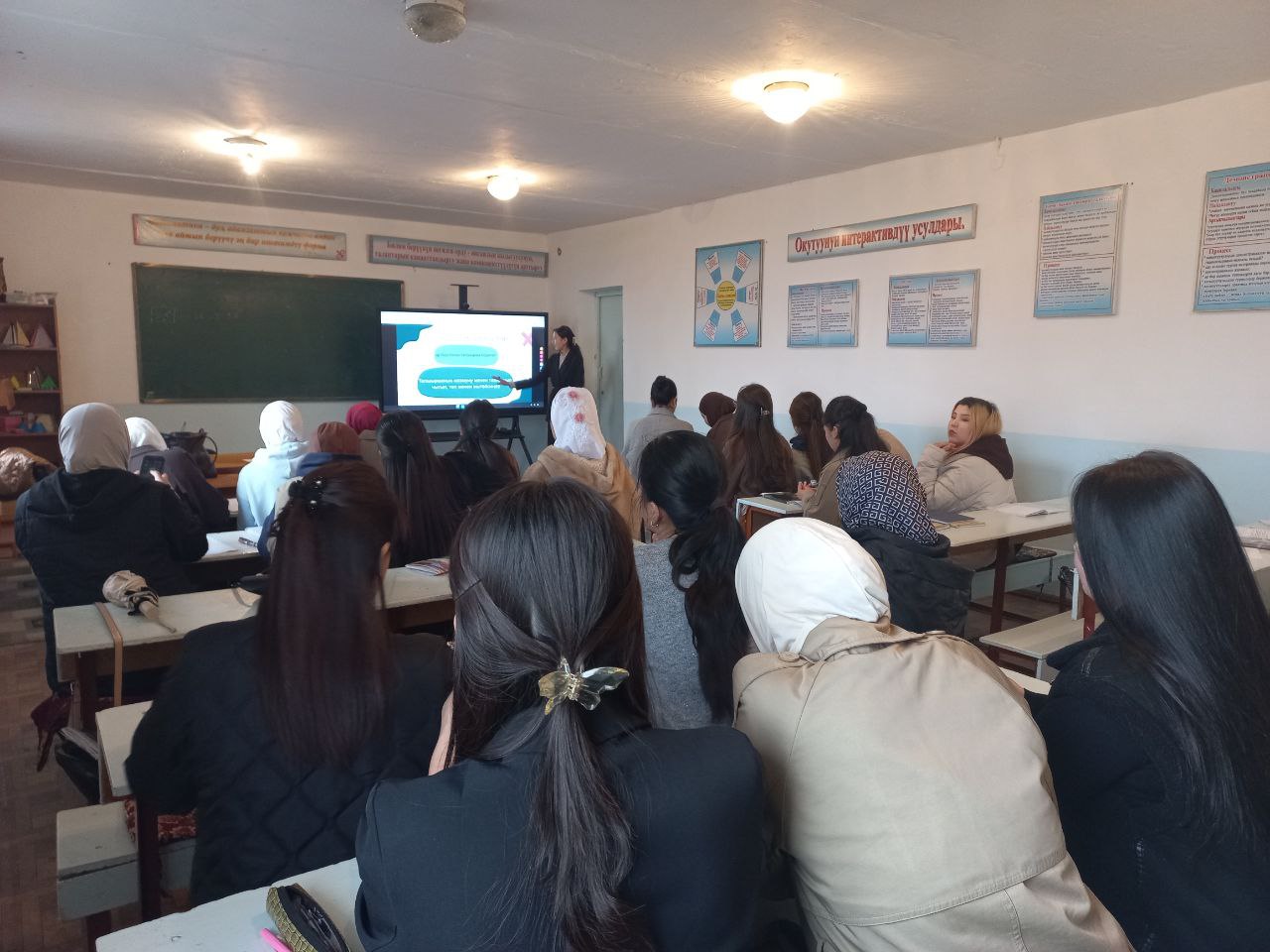
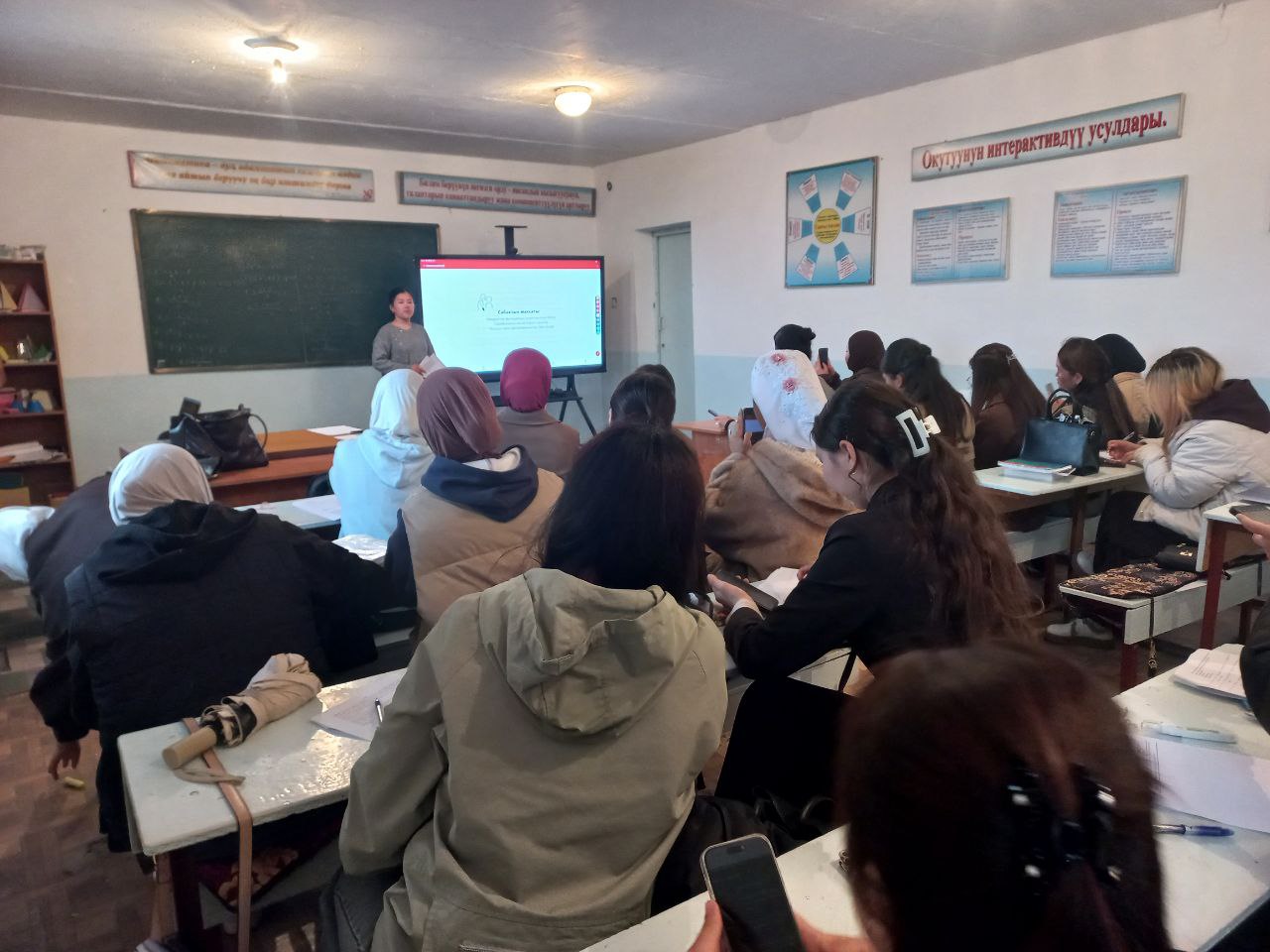
At the Pedagogical Institute named after E. Umetov of the Scientific and Educational Production Complex Jalal-Abad State University named after B. Osmonov, active work continues to enhance students’ professional skills within the concept of “work-based learning.” On March 4, 2026, under the supervision of Senior Lecturer of the Department of Mathematics and Mathematical Modeling, PhD in Physics and Mathematics M.N. Nurmatova, regular simulation-based practical sessions were conducted for students of group FMBB(M)-1-24.
The main advantage of this format lies in developing students’ abilities to independently plan lessons, manage the classroom, and conduct pedagogical reflection even before beginning their professional careers at school.
Practical Activities:
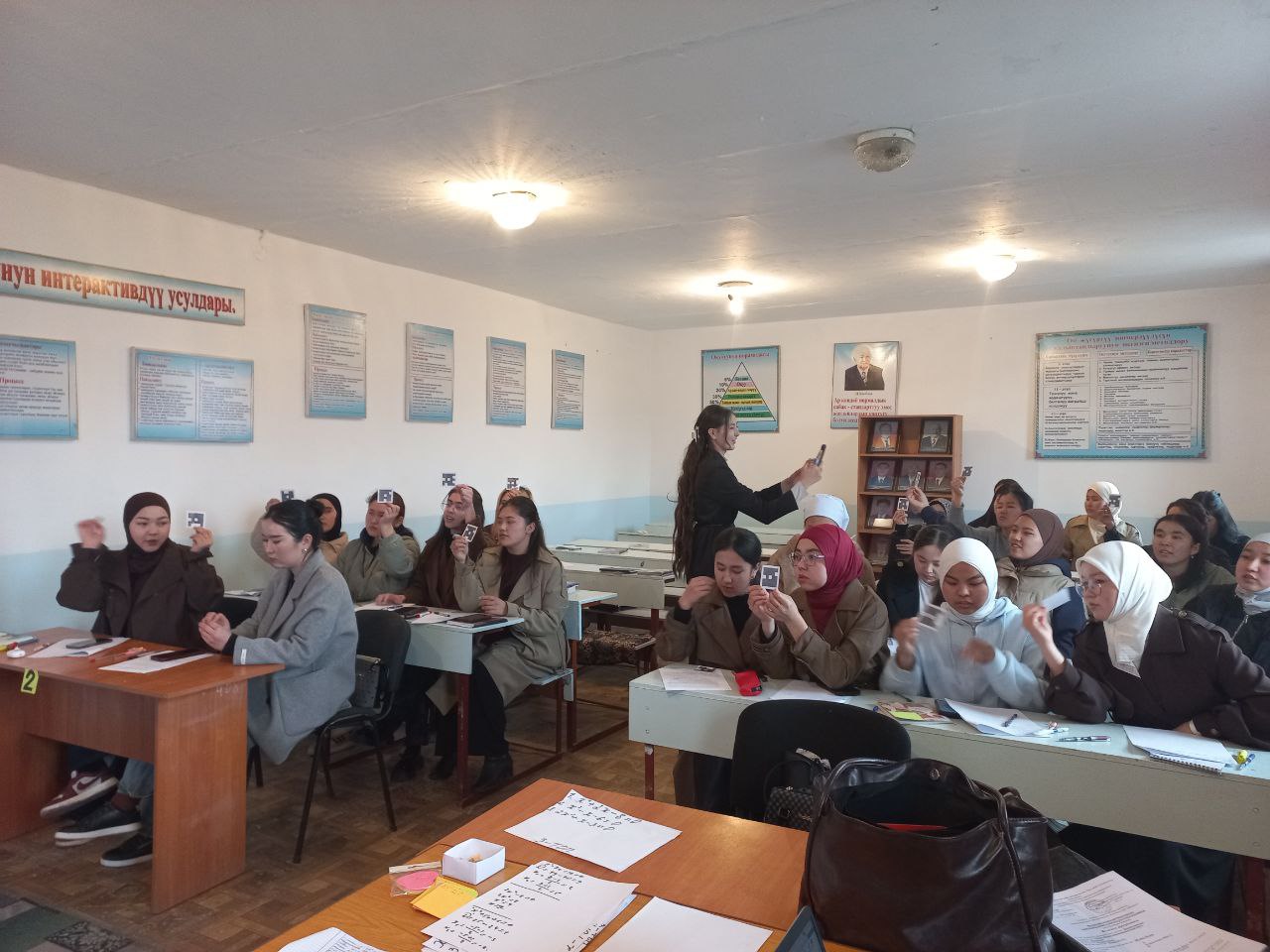
1. Isabaeva Aibiyke (Topic: “Quadratic Functions”). The lesson began with integrating mathematical theory into real-life situations. A discussion initiated through a problem involving the calculation of tile area evolved into group work, where students constructed mathematical models of real processes such as a “flower garden,” a “car’s path,” and a “basketball throw.” Aibiyke effectively managed time, listened to group presentations, and skillfully supplemented them with methodological explanations. At the final stage, formative assessment was conducted using the Plickers application, allowing immediate identification of gaps in the “students’” understanding.
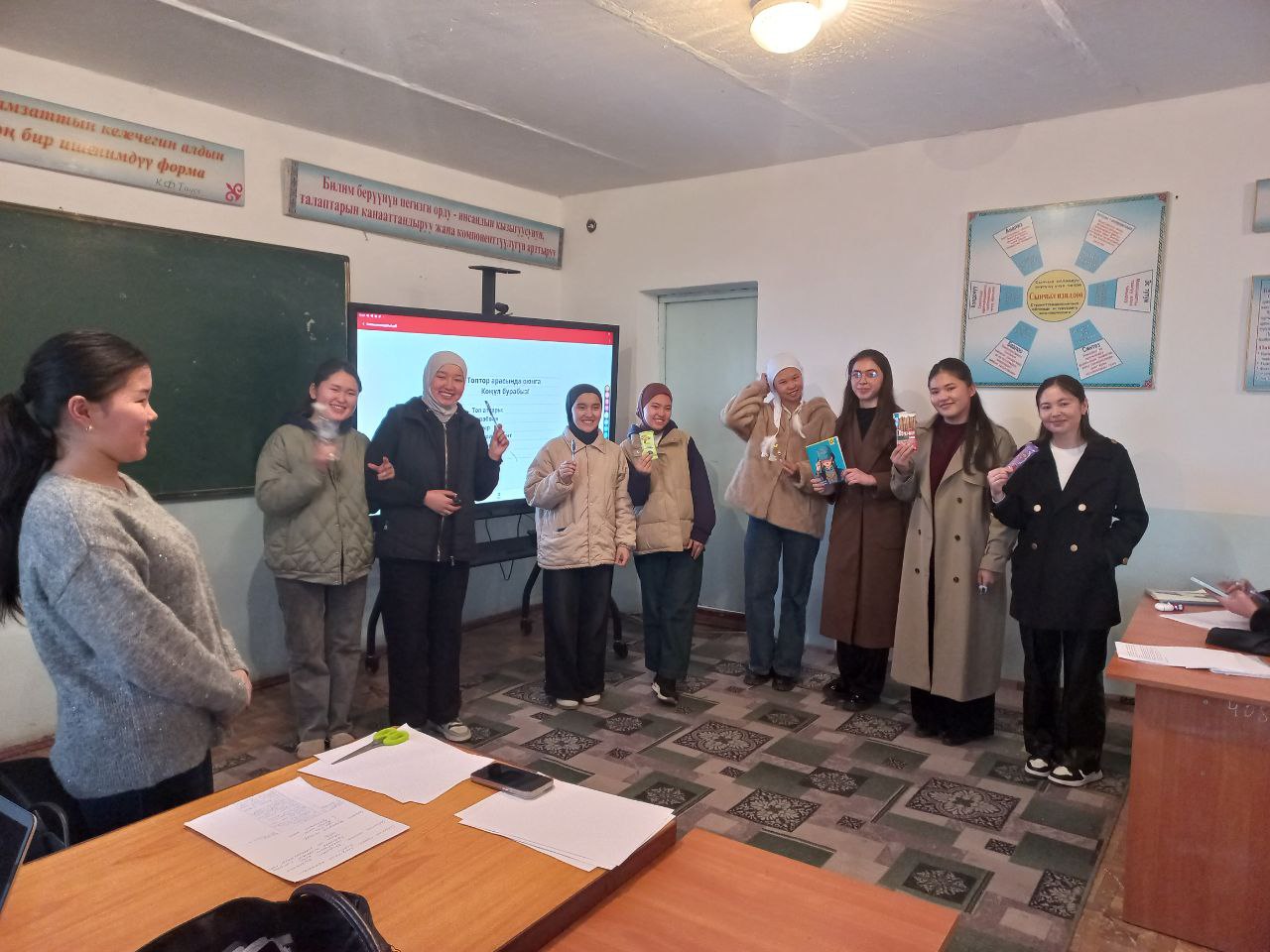
2. Oskonbaeva Elnura (Topic: “Quadratic Equations”). To increase learner motivation, Elnura incorporated game-based and stimulating techniques from the very beginning of the lesson. The stages of group formation and homework review were supported by visual materials. To reinforce the topic, the game “Who Is Faster?” was organized, in which each group completed specific tasks related to quadratic equations: the first group identified the vertex of the function, the second determined the direction of the parabola’s branches, the third found the roots of the equation, and the fourth identified the axis of symmetry.
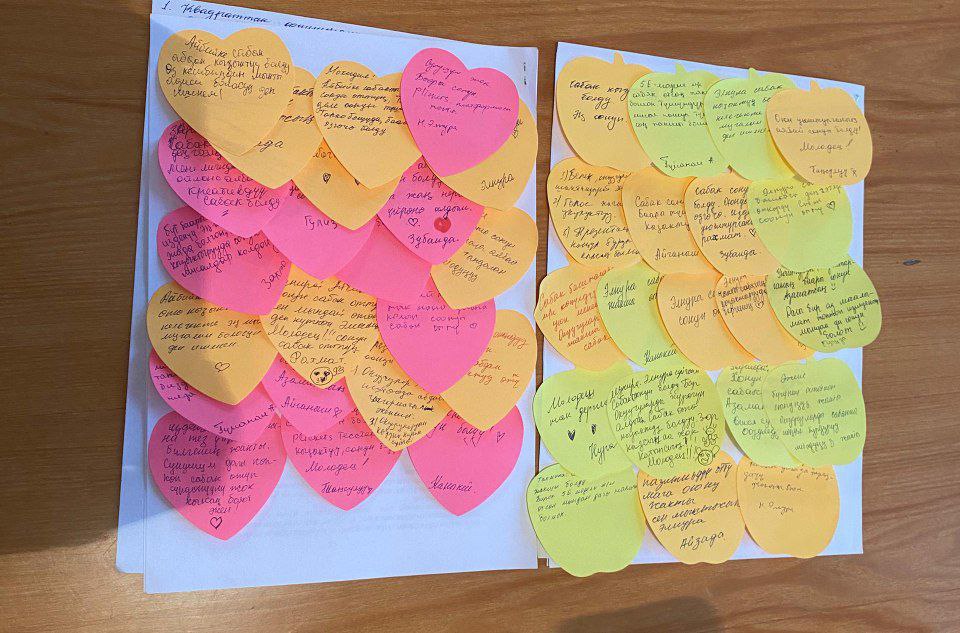
At the conclusion of the session, students conducted an in-depth reflection on their performance and exchanged constructive feedback using the “2 Stars and 1 Wish” method. This process enabled future teachers to share their impressions and collaboratively discuss pedagogical challenges encountered during the lesson.
Through such practical activities, Senior Lecturer M.N. Nurmatova monitors the progress of students’ professional skill development and guides their formation as qualified specialists who meet the demands of modern schools.