PROFESSIONAL-PROFILE PRACTICE WITHIN THE FRAMEWORK OF DUAL EDUCATION
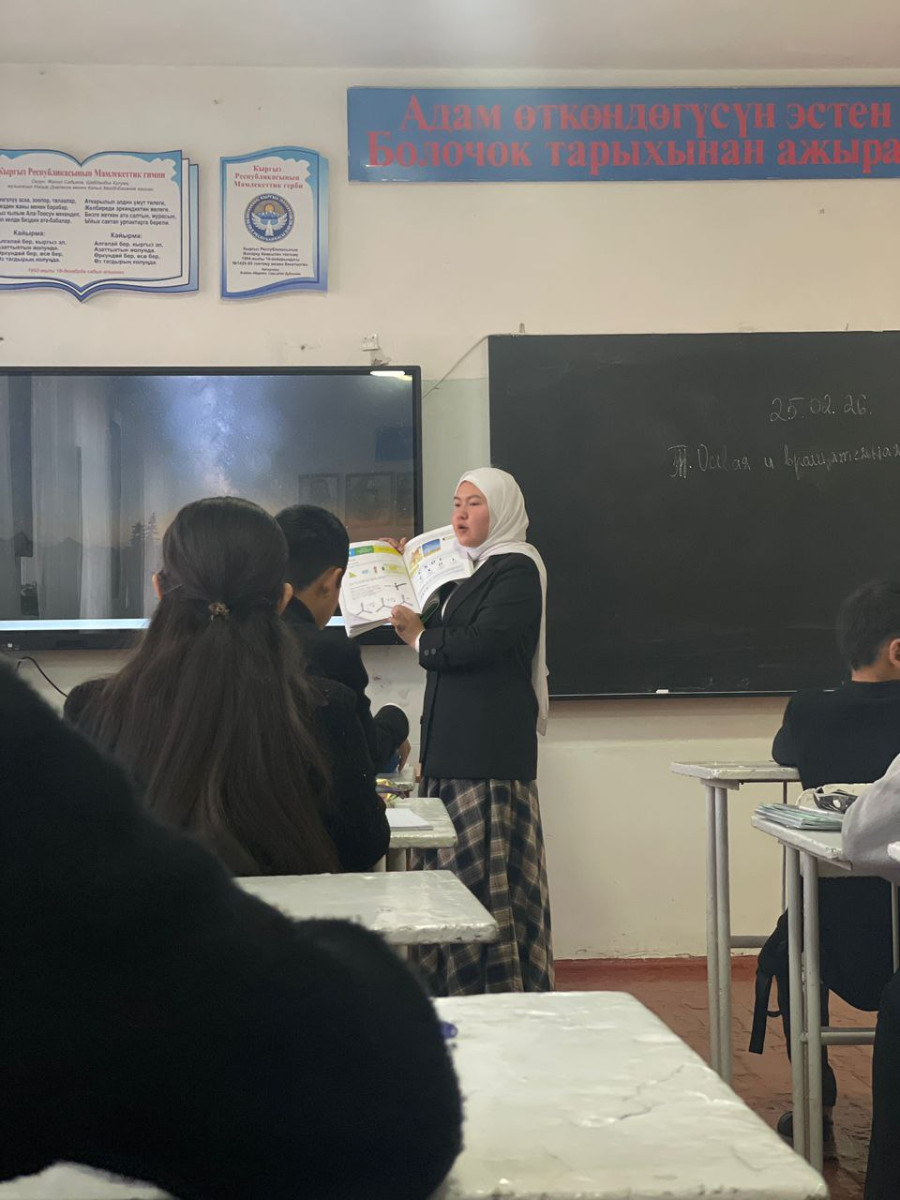
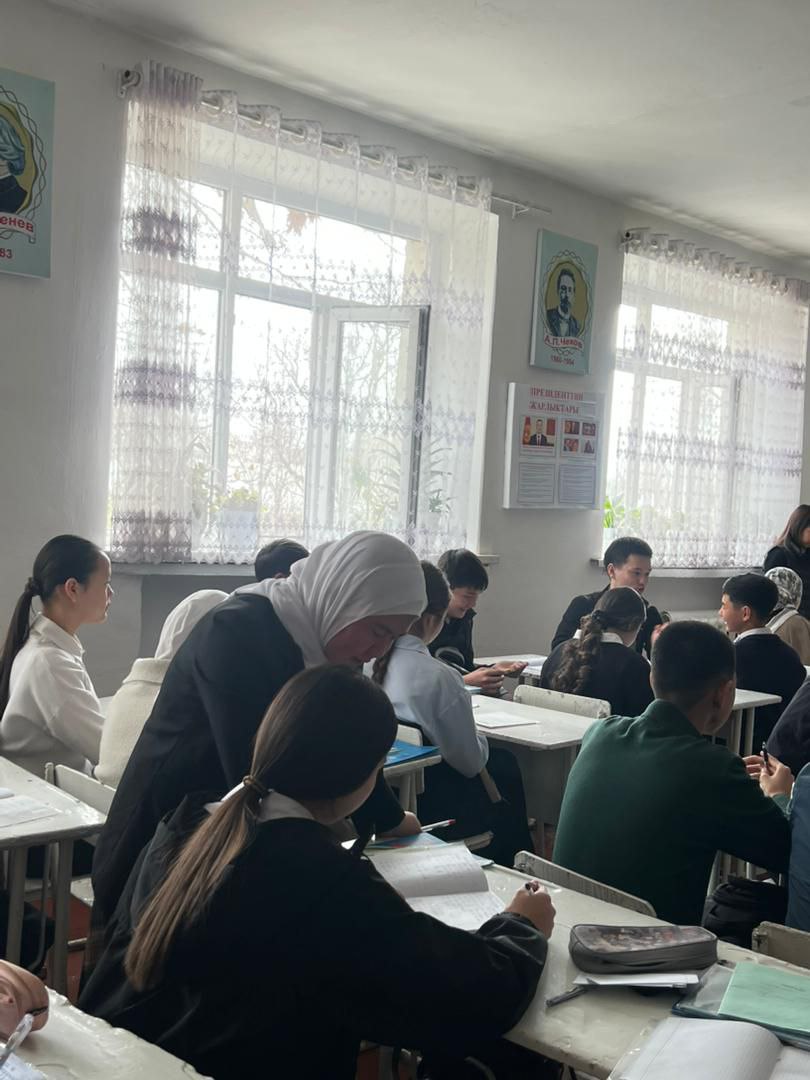
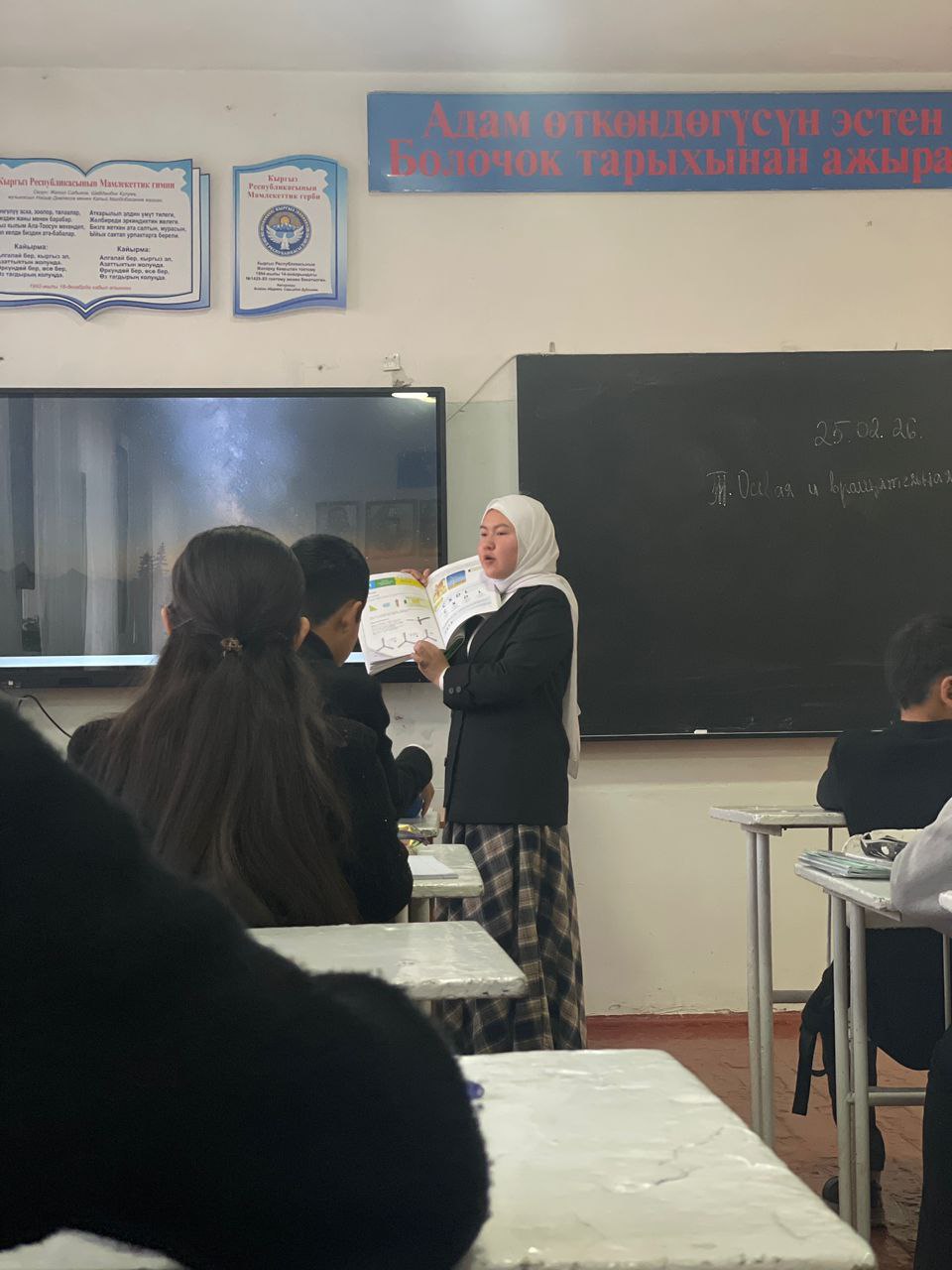
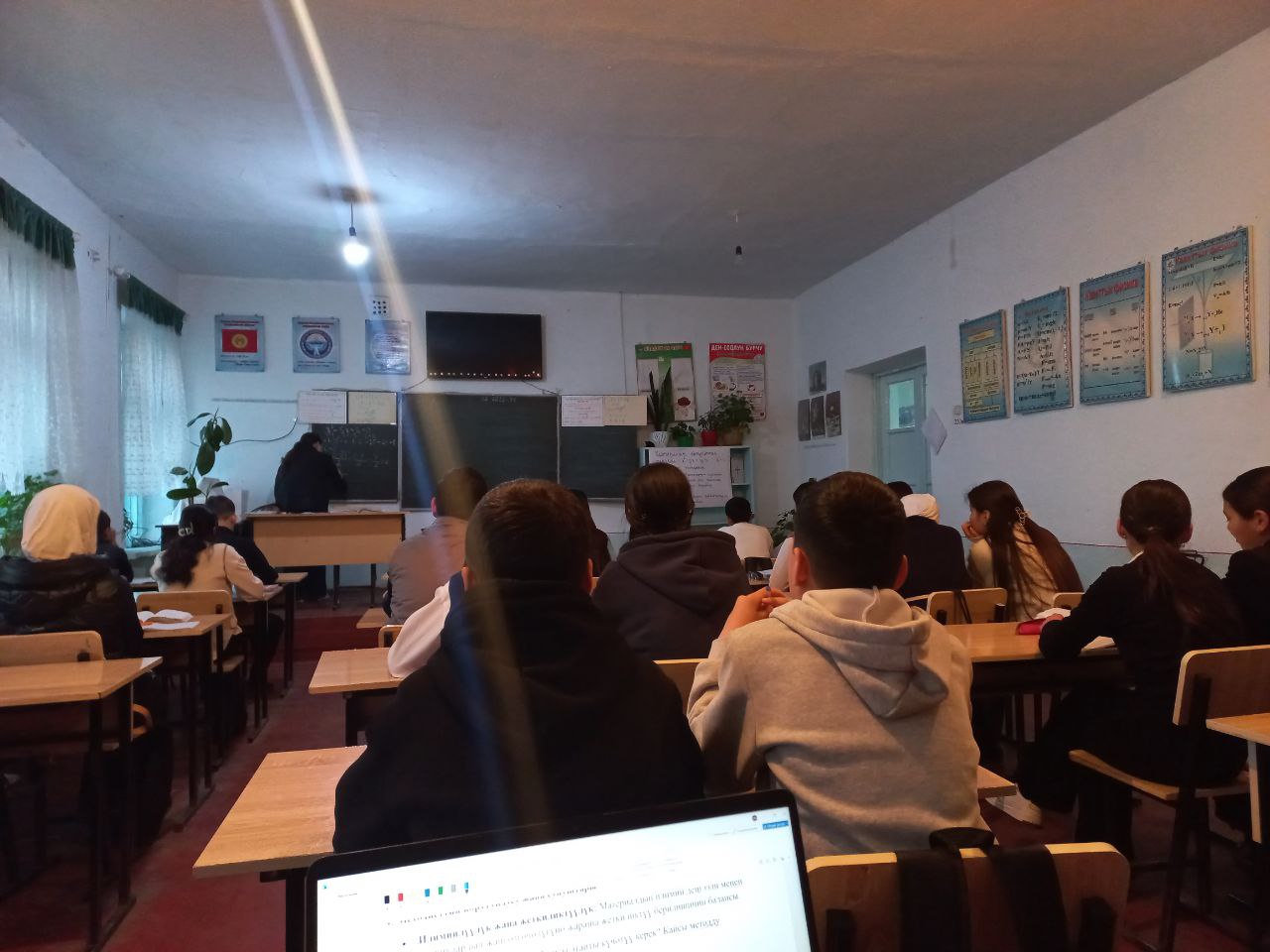
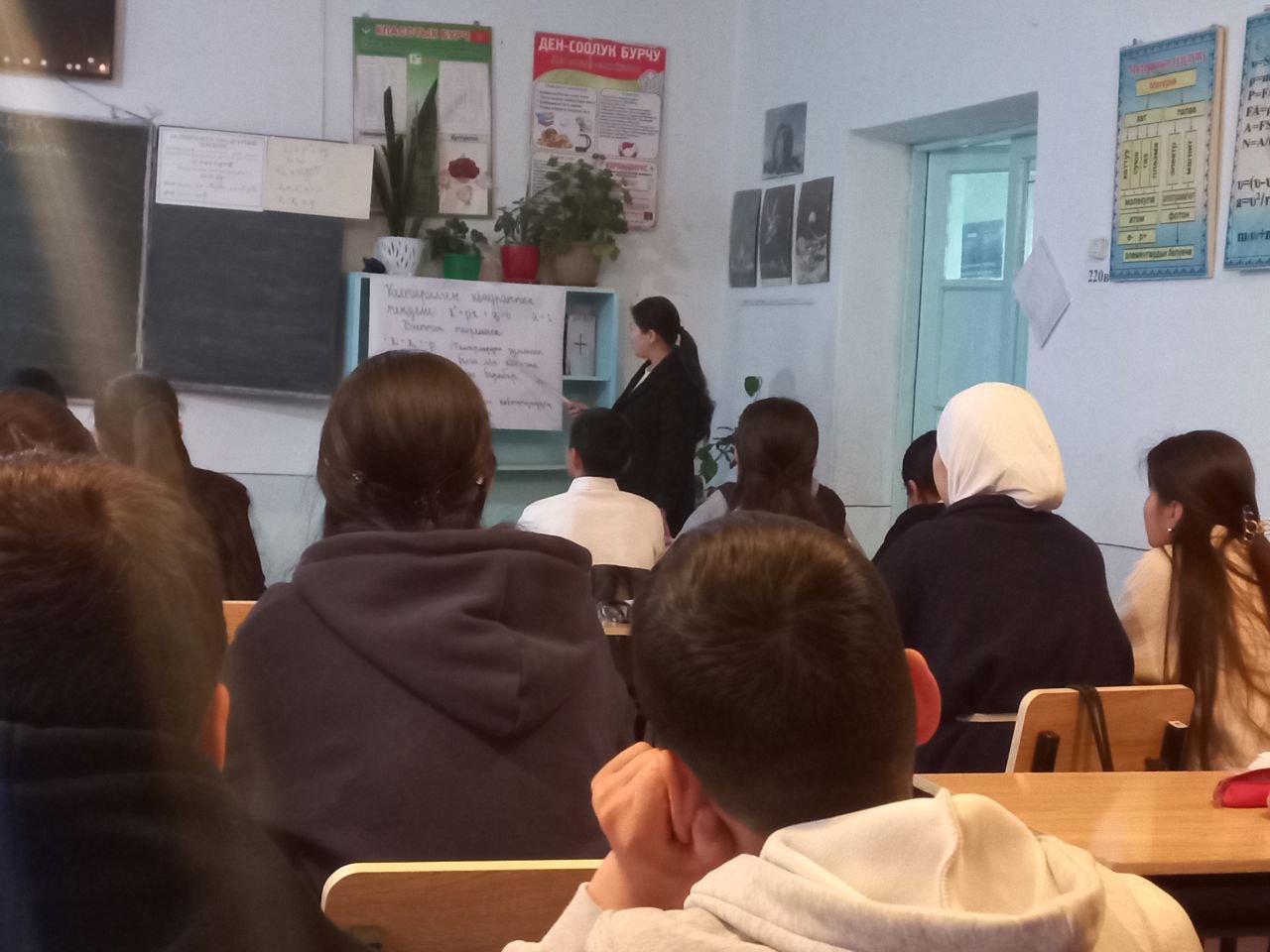
In order to implement the dual education model, students majoring in Mathematics (Program 550200: Physical and Mathematical Education) at the Department of Mathematics and Mathematical Modeling of the E. Umetov Pedagogical Institute (part of the B. Osmonov Jalal-Abad State University Scientific and Educational Complex) are currently undertaking professional-profile practice in partner schools. During their practice, students do not only plan and conduct independent lessons but also actively integrate into the school’s overall educational process. Together with their mentors, they participate in assessing students’ written work, assist in reviewing notebooks, and contribute to the preparation of supplementary teaching materials and visual aids. This activity facilitates the integration of theoretical knowledge with practical skills and fosters professional responsibility among future teachers. At Secondary School No. 9 named after R. Sanatbaev, student Aizat Baibolotova conducted a lesson on “Axial and Rotational Symmetry.” Particular attention was given to the visual modeling method: the properties of geometric figures were gradually revealed through drawings, diagrams, and practical examples. The instructional material was logically structured, and the concept of symmetry was reinforced through practical tasks, promoting the development of students’ spatial thinking and a meaningful comprehension of the topic. At Secondary School No. 12 named after Kaparbek Zhanishev, student [Surname] Nurpeiyil conducted an open lesson on “Vieta’s Theorem”. The lesson followed a standard pedagogical structure, with all stages logically interconnected. The explanatory-illustrative method was applied effectively; the material was presented clearly and accessibly, and the application of the formula was demonstrated through specific examples. During the lesson, the trainee’s pedagogical culture, clear and competent speech, ability to maintain an optimal pace, and capacity to establish constructive interaction with students were noted. The theoretical component was consistently supported by practical tasks, ensuring the methodological soundness of the lesson. The lessons were analyzed by the department methodologist and practice supervisor, M. Nurmatova. Based on the analysis, the trainees’ achievements were identified, and methodological recommendations for further professional development were provided. Overall, the dual education model has once again confirmed its effectiveness as a format for developing the professional competence of future teachers.