“Industrial Practice: Cooperation Between the College and Employers as the Foundation for Training Qualified Specialists”
The College of Economics and Law of the Scientific-Educational and Production Complex of B. Osmonov Jalal-Abad State University carries out activities aimed at combining students’ theoretical knowledge with practical experience and preparing specialists who meet the requirements of the labour market.
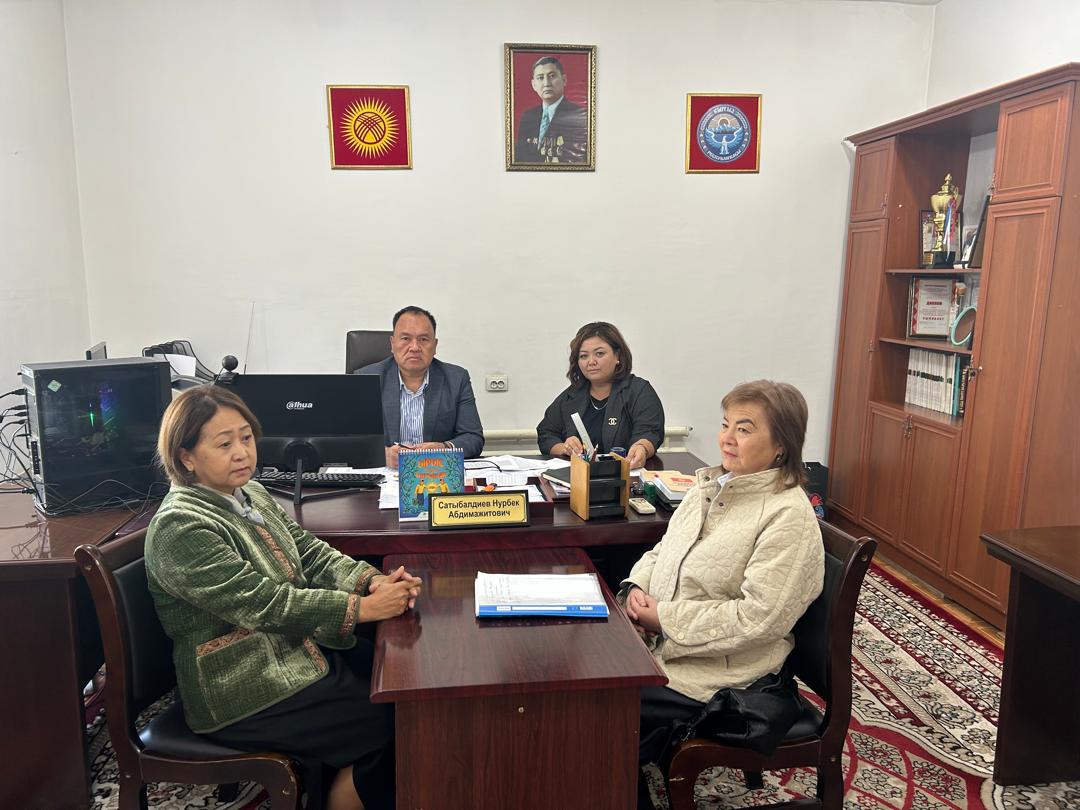
In line with the Sustainable Development Goals, a meeting was organized to enhance the practical training of students undertaking industrial placements at institutions and enterprises in the city of Manas and to strengthen cooperation between the educational institution and employers.
The meeting was attended by A. K. Kalmurzaeva, Head of Industrial Practice and Career Development at the College of Economics and Law; G. B. Bekiyeva and S. Y. Ashyrbaeva, practice supervisors of the Economics Subject Cycle Commission; Nurbek Abdimazhitovich Satybaldiev, Head of the Suzak District State Tax Service; and Isa Anvarovich Zholdoshbaev, Chief Legal Affairs Specialist of the State Tax Service for the city of Manas, Jalal-Abad Region.
During the meeting, the participants discussed the professional requirements for students, the conditions for organizing industrial practice, the implementation of the roadmap outlined in the practice programme, and the establishment of a dedicated industrial practice information corner at the host institution. They also considered matters related to students’ completion of practical assignments, the development of professional skills, compliance with workplace discipline, and joint efforts to resolve issues arising during the practice period.
The exchange of views with employers was aimed at improving students’ professional training, familiarizing them with work processes in the tax sector, and expanding opportunities to apply theoretical knowledge in practical settings.
Such activities contribute to the development of partnerships between the educational institution and employers, the improvement of industrial practice quality, and the training of competitive specialists who meet the requirements of the modern labour market.